

In this Article
- 1 Introduction
- 2 Nutrition information
- 3 Health Benefits of Beetroots
- 3.1 Helps to lower blood cholesterol.
- 3.2 Can lower blood pressure.
- 3.3 Helps improve exercise performance.
- 3.4 Aids digestion.
- 3.5 Promotes gut health.
- 3.6 Helps to prevent and fights cancer.
- 3.7 Improves insulin sensitivity.
- 3.8 Could help improve blood clotting.
- 3.9 Could boost blood production.
- 3.10 Could help foster brain health.
Introduction
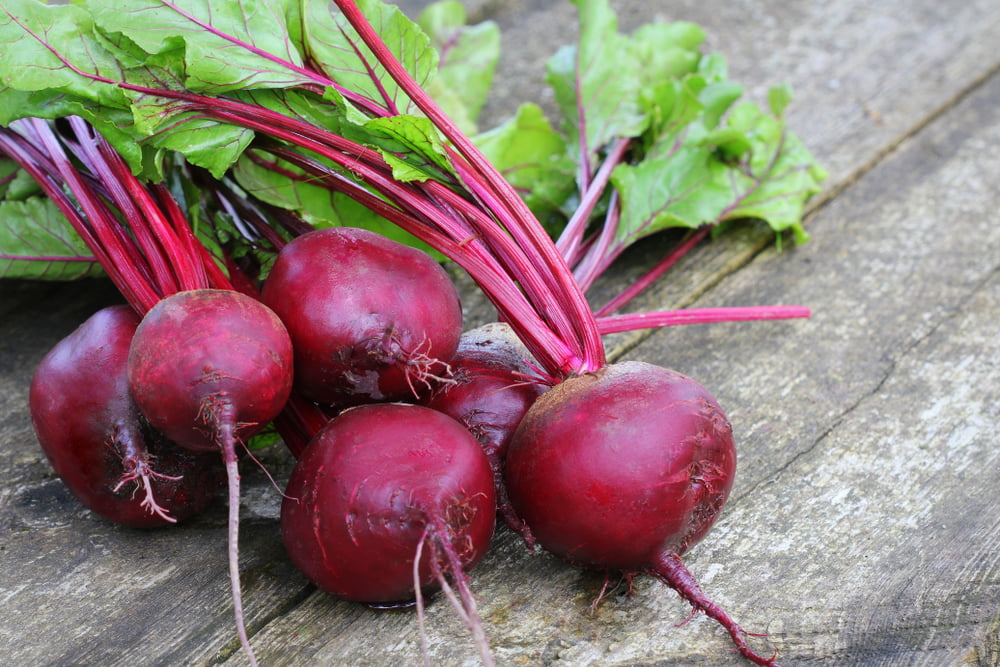
If you are growing your own beetroot this year, now they are certainly started to be ready to harvest, so you can enjoy all the health benefits they have. Beetroots are the roots of the Beta vulgaris L plant. They are deep red to purple in colour, and are believed to have originated from the Mediterranean, as they have a long history of use in ancient Egypt and Greece. Beetroot is also delicious roasted, with pine nuts and olive oil. Beetroot can be chopped and eaten raw all by itself, or added to salads, or cooked by boiling or roasting. Beetroot can also be processed into juice, jellies, or jams, or added to smoothies or added as colouring in baked cakes or cookies (1, 2).
Nutrition information
Beetroot has a very rich nutrition profile. The following are contained in a 100g serving of beetroot (3).
- Energy: 44 calories
- Protein: 1.6g
- Carbohydrate: 9.5g
- Fat: 0.2g
- Fiber: 2.8g
- Folate: 109µg (20% DV)
- Manganese: 0.3mg (14% DV)
- Potassium: 325mg (7% DV)
- Vitamin C: 4.9mg (4% DV)
The DV (daily value) is the recommended amount of nutrient to consume or not surpass daily. The percentage daily value (% DV) therefore indicates how much a nutrient contributes to your diet per serving of a particular food or food product in question. A DV of 5% or lower per serving of a food is considered low, whereas a DV of 20% or above per serving of a food is considered high (4).
Health Benefits of Beetroots
Beetroot contains minerals, vitamins and other naturally occurring compounds that are responsible for its numerous health benefits. The following are some of the amazing health benefits of beetroot.
Helps to lower blood cholesterol.
Beetroot contains certain compounds called phytosterols which have a similar cell structure to cholesterol. When consumed, they are digested and absorbed more in the digestive tract than cholesterol. This results in cholesterol being excreted as waste thus lowering blood cholesterol concentrations (5).
Beetroot also contains compounds called betalains, which in red beetroot can also exist in another form called betanin. Betanin has been proven to help lower blood cholesterol concentrations by preventing LDL (low-density lipoprotein) cholesterol oxidation. Oxidation is a natural chemical process that occurs in the body, but when it becomes too much, it can cause cell damage and harm to the body (6).
LDL cholesterol is referred to as “bad: cholesterol as it is very prone to oxidation. When it is oxidized, it can form plaques in the walls of the arteries, narrowing the artery walls and disrupting blood flow. Plaque formation is the onset of atherosclerosis, which can cause coronary heart, angina (chest pain), heart attack, loss of limbs, and erectile dysfunction amongst others (7).
Several research studies have reported that consuming an average of 2g of phytosterols a day can significantly decrease LDL cholesterol by about 8 – 10% (8).
Furthermore, fiber in beetroot helps lower blood cholesterol as well by binding to cholesterol molecules in the small intestines and preventing them from being absorbed into the blood stream. This cholesterol is passed out of the body with feces (9).
Can lower blood pressure.
Beetroots are an excellent source of dietary nitrates, which when consumed is converted in the body to nitrite and eventually nitric oxide gas in the blood streams. Nitric oxide produced inside the body is a potent vasorelaxant and vasodilator, which causes the blood vessels to relax and widen respectively. This eases blood flow and ultimately reduces blood pressure which is very beneficial for hypertensive patients (10).
In one study carried out with 68 hypertensive patients, dietary supplementation with 250ml of beetroot juice for 4 weeks led to sustained blood pressure reduction (11).
Another study carried out by the British Heart Foundation on 64 hypertensive patients reported that they all saw their blood pressure levels fall back to the normal range with a daily consumption of 250ml of beetroot juice (12).
Yet another clinical study reported a reduction of daily systolic blood pressure in participants after consuming beetroot juice concentrate for 3 weeks (13).

Helps improve exercise performance.
As mentioned earlier, beetroot is a rich source of nitrates which is converted to nitric oxide gas in the body. Besides increasing blood flow, nitric oxide also plays other key roles in the body like increasing gas exchange, mitochondrial biogenesis, and improving muscle contraction (14).
Mitochondrial biogenesis is a complicated biological process of growth and division of mitochondria, which increases its numbers. This process helps to renew the mitochondrial network and improves its function. The main role of mitochondria is to use the energy from the foods we eat to generate ATP (Adenosine triphosphate), the main energy source used and stored by the cells. ATP is used to drive many different body activities like movements, growth, and homeostasis (a state of internal stability or equilibrium) (15).
When the mitochondria are regularly multiplied in numbers and renewed, they convert energy into ATP more efficiently, increasing the availability of energy for muscles. Thus, a good density of mitochondria enables sustained exercise performance, which enables a person to train longer and faster (16).
Supplementing with beetroot juice has been reported to enhance cardiorespiratory endurance resulting in improved athletic performances at different distances, increased oxygen uptake and increased exhaustion time. In one research study, trained cyclists who consumed beetroot juice had their performance increased by about 0.8% in a 50 – mile test (17).
Aids digestion.
Beetroot is a good source of dietary fiber, with a 100g gram serving containing 2.8g of dietary fiber. Dietary fiber is a type of carbohydrate that is not digested by the enzymes in the small intestines, hence it is not absorbed into the blood stream either. There are two types of fiber, soluble and insoluble, and both are present in significant amounts in beetroots (18).
Insoluble fiber does not dissolve in water, but rather absorbs water from the intestines, which makes stool soft, increases its volume and makes it easy to pass out. This prevents constipation which can cause bloating and stomach cramps and in serious cases anal fissures, and hemorrhoids. Also, because insoluble fiber absorbs water, it increases bowel movements, which also helps to prevent constipation (18, 19).
Promotes gut health.
Soluble fiber present in beetroot dissolves in water, forming a thick gel that travels undigested and unabsorbed until it reaches the large intestine (colon). There it serves as food for healthy bacteria that naturally live there, increasing their population. A large population of healthy bacteria is crucial to phase out harmful and disease-causing bacteria that can cause disease to the digestive tract and body entirely. By so doing, fiber contributes to boosting the overall immunity of the body (20).
The type of population of bacteria in a person’s gut directly impacts many biological activities like immune function, inflammation reactions, food metabolism and mood. A large population of unhealthy bacteria in the gut compared to healthy bacteria has been reported to cause chronic diseases and health conditions like diabetes, IBD (inflammatory bowel disease), obesity and depression (20).
The two popular bacteria population in the gut are the Firmicutes and Bacteroidetes genera, and the ratio of their population (F/B ratio) is usually used to describe the state of the gut health. In obese people for example, there is an increased population of Firmicutes and a reduced population of Bacteroides (20).
Helps to prevent and fights cancer.
Betalains have been reported to show anti-cancer activities as they can disrupt carcinogenesis, the mutation of normal cells inro cancer cells (21).
Beetroot also contains a good amount of fiber, and fiber rich foods have been reported to help prevent certain cancers like colon cancers in many studies. By increasing bowel movements, fiber helps to reduce the contact time between cancer causing substances and the walls of the colon. This further helps to prevent the onset of colon cancer (22).
Moreover, as bacteria feed on fiber, they ferment them and release products like short chain fatty acids, that have been proven to have anti-cancer activities. These include acetate, butyrate, and propionate. Butyrate for example, protects the gut from inflammation, which is a risk factor for the development of cancer. Chronic inflammation causes damage to cell DNA, increasing the chances of DNA mutation which causes cancer. Butyrate also stimulates mucus production which protects the colon walls from bacterial infection that could trigger inflammation and increase the risk of cancer development (23).
Improves insulin sensitivity.
Beetroot contains a substance called alpha lipoic acid (ALA) which has been proven to improve insulin sensitivity via several pathways and mechanisms. ALA activates the enzyme AMPK (AMP- activated protein kinase), which maintains energy balance in the cells. AMPK inhibits the consumption of energy and activates the production of ATP which all help to reduce glucose production from the liver. Anti-diabetic drugs like metformin and thiazolidinediones, that increase insulin sensitivity, work by activating this AMPK pathway (24).
Additionally, AMPK also improves insulin sensitivity by reducing the accumulation of triglyceride by skeletal muscles. The accumulation of triglyceride in skeletal muscles contributes to insulin resistance in patients with type 2 diabetes and diabetes associated with obesity (24).
Besides, ALA is a strong antioxidant that helps to prevent oxidative stress and cell damage. Antioxidants are compounds that scout and capture free radicals, which are waste products of normal metabolic activities in the body. When antioxidant levels in the body are low, free radicals accumulate, causing excessive oxidation reactions that eventually lead to cell damage (24).
The reactive oxygen species (ROS) are the free radicals that are implicated in the development of diabetes. Vascular dysfunction that is caused by ROS is one of the major features of diabetes. The beta cells of the pancreas which are involved in producing insulin are very vulnerable to oxidative stress, as it causes cell death or dysfunction. Damage to beta cells impairs their ability to produce insulin which consequently lead to high blood sugar as seen in diabetic patients (24, 25).
Could help improve blood clotting.
Beetroot is a good source of manganese that works together with vitamin K to help with proper blood clotting. When the skin is wounded, blood clotting helps prevent further loss of blood and facilitates wound healing (26).
Manganese is also a coenzyme, which assists other enzymes perform their activities properly and efficiently. For example, manganese helps in bone formation and in the metabolism of carbohydrates (glucose in particular), protein and cholesterol. The role manganese plays in carbohydrate metabolism is important for those suffering from diabetes type 2. Several clinical studies have reported an increase in the prevalence of diabetes with low levels of manganese in the blood (27).
Could boost blood production.
Beetroot contains decent amounts of folate (vitamin B9) which plays a critical role in the production of both red and white blood cells in the bone marrow. This is particularly important in periods of rapid growth like during pregnancy and infancy. This is why pregnant women often are given folic acid supplements, to ensure they have enough to produce adequate amounts of blood needed for the developing fetus (28).
Also, folate is needed to produce the genetic material DNA (deoxyribonucleic acid) and RNA (ribonucleic acid). Folate deficiency during pregnancy for example can result in birth defects of the fetus such as spina bifida (spinal cord malformation) and anencephaly (improper development of the brain and bones of the skull) (28).
Could help foster brain health.
Folate in beetroots helps to breakdown the amino acid homocysteine in cells. Elevated levels of homocysteine increase the risk for developing several chronic diseases like dementia, heart attack and stroke amongst others (29).
A large cohort study involving 80,000 women followed over 14 years, reported a 31% reduced risk of coronary artery disease for women that consumed the most folate compared to those that consumed the least (30).
High concentrations of homocysteine may damage brain cells by enabling the buildup of certain molecules like amyloid beta peptide and tau proteins in the brain. This impairs the repair of DNA and enhances cell degeneration due to oxidative stress. Amyloid beta peptide and tau protein accumulation in the brain are all linked to the onset of dementia and Alzheimer’s disease (31).
Beetroot is not just a delicious vegetable that has many applications in different cuisines around the world. It is a super food, loaded with nutrients and naturally occurring compounds that have several beneficial biological activities for the body.
Consumption should be done with moderation as beetroot contains oxalates, which when consumed in excess can cause gout. Gout is a type of arthritis that is caused by an increase in blood uric acid levels, and it is usually painful. Since oxalates from beetroot can increase blood uric acid concentrations, they should be consumed with moderation (32).
Also, oxalates can cause kidney stones if they are consumed in excess, so people with a history of kidney stones should either stay away from beetroots or consume them very rarely (32).
REFERENCES
- Scientific Classification. (n.d.). Beets Beta vulgaris. Hamilton.Edu. Retrieved May 16, 2023, from https://academics.hamilton.edu/foodforthought/our_research_files/beet.pdf
- Pothula, A. K., Igathinathane, C., Faller, T., & Whittaker, R. (2014). Novel front end processing method of industrial beet juice extraction for biofuels and bioproducts industries. Biomass & Bioenergy, 68, 161–174. https://doi.org/10.1016/j.biombioe.2014.06.017
- FoodData Central. (n.d.). Usda.Gov. Retrieved May 16, 2023, from https://fdc.nal.usda.gov/fdc-app.html#/food-details/169145/nutrients
- An informational Newsletter about Beneficial Beets. (n.d.). The BEETing of your heart. Lehman.Edu. Retrieved May 16, 2023, from https://www.lehman.edu/dietetic-internship-program/documents/TheBEETing-of-your-Heart-by-Annie-Rusoff.pdf
- Center for Food Safety, & Nutrition, A. (2023, March 22). Daily Value on the New Nutrition Facts Label. U.S. Food and Drug Administration. https://www.fda.gov/food/new-nutrition-facts-label/daily-value-new-nutrition-and-supplement-facts-labels
- Esatbeyoglu, T., Wagner, A. E., Schini-Kerth, V. B., & Rimbach, G. (2015). Betanin–a food colorant with biological activity. Molecular Nutrition & Food Research, 59(1), 36–47. https://doi.org/10.1002/mnfr.201400484
- What Is Atherosclerosis? (n.d.). NHLBI, NIH. Retrieved May 16, 2023, from https://www.nhlbi.nih.gov/health/atherosclerosis
- Cabral, C. E., & Klein, M. R. S. T. (2017). Phytosterols in the treatment of hypercholesterolemia and prevention of cardiovascular diseases. Arquivos Brasileiros de Cardiologia, 109(5), 475–482. https://doi.org/10.5935/abc.20170158
- Department of Health, & Human Services. (n.d.). Dietary fibre. Gov.Au. Retrieved May 16, 2023, from http://www.betterhealth.vic.gov.au/health/healthyliving/fibre-in-food
- Benjamim, C. J. R., Porto, A. A., Valenti, V. E., Sobrinho, A. C. da S., Garner, D. M., Gualano, B., & Bueno Júnior, C. R. (2022). Nitrate derived from beetroot juice lowers blood pressure in patients with arterial hypertension: A systematic review and meta-analysis. Frontiers in Nutrition, 9, 823039. https://doi.org/10.3389/fnut.2022.823039
- Kapil, V., Khambata, R. S., Robertson, A., Caulfield, M. J., & Ahluwalia, A. (2015). Dietary nitrate provides sustained blood pressure lowering in hypertensive patients: a randomized, phase 2, double-blind, placebo-controlled study: A randomized, phase 2, double-blind, placebo-controlled study. Hypertension, 65(2), 320–327. https://doi.org/10.1161/HYPERTENSIONAHA.114.04675
- British Heart Foundation. (n.d.). Beetroot juice lowers high blood pressure, suggests research. British Heart Foundation. Retrieved May 16, 2023, from https://www.bhf.org.uk/what-we-do/news-from-the-bhf/news-archive/2015/january/beetroot-and-blood-pressure
- Jajja, A., Sutyarjoko, A., Lara, J., Rennie, K., Brandt, K., Qadir, O., & Siervo, M. (2014). Beetroot supplementation lowers daily systolic blood pressure in older, overweight subjects. Nutrition Research (New York, N.Y.), 34(10), 868–875. https://doi.org/10.1016/j.nutres.2014.09.007
- Vaughan, R. A., Gannon, N. P., & Carriker, C. R. (2016). Nitrate-containing beetroot enhances myocyte metabolism and mitochondrial content. Journal of Traditional and Complementary Medicine, 6(1), 17–22. https://doi.org/10.1016/j.jtcme.2014.11.033
- Uittenbogaard, M., & Chiaramello, A. (2014). Mitochondrial biogenesis: a therapeutic target for neurodevelopmental disorders and neurodegenerative diseases. Current Pharmaceutical Design, 20(35), 5574–5593. https://doi.org/10.2174/1381612820666140305224906
- Brand, M. D., Orr, A. L., Perevoshchikova, I. V., & Quinlan, C. L. (2013). The role of mitochondrial function and cellular bioenergetics in ageing and disease: Mitochondrial function in ageing and disease. The British Journal of Dermatology, 169 Suppl 2(0 2), 1–8. https://doi.org/10.1111/bjd.12208
- Domínguez, R., Cuenca, E., Maté-Muñoz, J. L., García-Fernández, P., Serra-Paya, N., Estevan, M. C. L., Herreros, P. V., & Garnacho-Castaño, M. V. (2017). Effects of beetroot juice supplementation on cardiorespiratory endurance in athletes. A systematic review. Nutrients, 9(1), 43. https://doi.org/10.3390/nu9010043
- Huizen, J. (2017, August 31). Soluble and insoluble fiber: Differences and benefits. Medicalnewstoday.Com. https://www.medicalnewstoday.com/articles/319176
- Constipation. (n.d.). Nhsinform.Scot. Retrieved May 16, 2023, from https://www.nhsinform.scot/illnesses-and-conditions/stomach-liver-and-gastrointestinal-tract/constipation
- Mariat, D., Firmesse, O., Levenez, F., Guimarăes, V., Sokol, H., Doré, J., Corthier, G., & Furet, J.-P. (2009). The Firmicutes/Bacteroidetes ratio of the human microbiota changes with age. BMC Microbiology, 9, 123. https://doi.org/10.1186/1471-2180-9-123
- Lechner, J. F., & Stoner, G. D. (2019). Red beetroot and betalains as cancer chemopreventative agents. Molecules (Basel, Switzerland), 24(8), 1602. https://doi.org/10.3390/molecules24081602
- Zeng, H., Lazarova, D. L., & Bordonaro, M. (2014). Mechanisms linking dietary fiber, gut microbiota and colon cancer prevention. World Journal of Gastrointestinal Oncology, 6(2), 41–51. https://doi.org/10.4251/wjgo.v6.i2.41
- Dietary Prevention of Colon Cancer. (n.d.). Upmcphysicianresources.Com. Retrieved May 16, 2023, from https://www.upmcphysicianresources.com/news/011922-dietary-prevention-colon-cancer
- Golbidi, S., Badran, M., & Laher, I. (2011). Diabetes and alpha lipoic Acid. Frontiers in Pharmacology, 2, 69. https://doi.org/10.3389/fphar.2011.00069
- Kim, H.-J., Kim, D., Yoon, H., Choi, C. S., Oh, Y. S., & Jun, H.-S. (2020). Prevention of oxidative stress-induced pancreatic beta cell damage by Broussonetia kazinoki Siebold fruit extract via the ERK-Nox4 pathway. Antioxidants (Basel, Switzerland), 9(5), 406. https://doi.org/10.3390/antiox9050406
- Manganese. (2022, September 15). The Nutrition Source. https://www.hsph.harvard.edu/nutritionsource/manganese/
- Du, S., Wu, X., Han, T., Duan, W., Liu, L., Qi, J., Niu, Y., Na, L., & Sun, C. (2018). Dietary manganese and type 2 diabetes mellitus: two prospective cohort studies in China. Diabetologia, 61(9), 1985–1995. https://doi.org/10.1007/s00125-018-4674-3
- Folate (Folic Acid) – Vitamin B9. (2012, September 18). The Nutrition Source. https://www.hsph.harvard.edu/nutritionsource/folic-acid/
- Carmel, R., Green, R., Rosenblatt, D. S., & Watkins, D. (2003). Update on cobalamin, folate, and homocysteine. Hematology, 2003(1), 62–81. https://doi.org/10.1182/asheducation-2003.1.62
- Carmel, R., Green, R., Rosenblatt, D. S., & Watkins, D. (2003). Update on cobalamin, folate, and homocysteine. Hematology, 2003(1), 62–81. https://doi.org/10.1182/asheducation-2003.1.62
- Rukmangadachar, L. A., & Bollu, P. C. (2022). Amyloid Beta Peptide. StatPearls Publishing.
- Health Benefits of Beetroot. (n.d.). WebMD. Retrieved May 16, 2023, from https://www.webmd.com/diet/health-benefits-beetroot
